




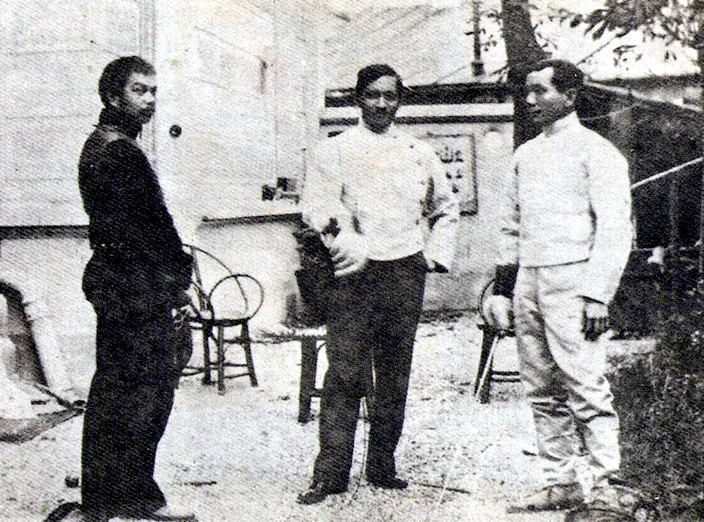
 THE culture of dueling that Jose Rizal, Antonio Luna, and Galicano Apacible played in Madrid was not essentially Filipino. It was basically European, a part of the 19th century European code of duello. Neither was the challenge of duel issued by then Manila Mayor Arsenio Lacson to a Bureau of Customs functionary, or the late Waldy Carbonnel’s answer to then Davao City Mayor Rodrigo Duterte’s challenge for a duel.
Dueling was a ritualistic way to settle disputes and disagreements for persons, who regarded themselves as “gentlemen.” It was institutionalized as a way to defend honor. It was a response not for money, but not for a perceived offense, which includes insults like calling another person a liar, coward, filibustero (filibusterer), or attacking his family, his name and reputations, his woman, his creed, or his race. There were Core rules like the Irish Code Duello of 1777 and later the French codes.
Dueling was indeed a social performance, showing one was willing to die rather than live with insults. That was the reason Filipino Ilustrados in Madrid in 1888-1890 did it constantly. For instance, Galicano Apacible wrote that “duels were legal and young hotheads were ready with swords and pistols aimed at unsympathetic Spaniards and even at themselves.”
Filipino Ilustrados took it seriously and adopted it as part of their governing mores there. In Spain, the people there believed in “punto de honor,” or pundonor or, literally, point of honor, which was part of their culture. The Filipino Ilustrados lived with that Spanish honor code.

A Spanish journalist named Mir Deas called the Filipinos there as “indio,” “filibustero,” indecent, or filthy, as what he did to Anotnio Luna and other Filipinos there. Luna’s response was not a lawsuit but a duel challenge. Mir Deas did not accept it but swallowed his pride. He did not attack Filipinos after Luna’s challenge and faded away from history.
There is no formal duel culture among Filipinos even in pre-Spanish era. What they had were tribal wars and “amok” (going berserk killing anybody). But there was a perceptible Code Duello. Under Spanish law Novisima Recopilacion, dueling was prohibited in the country, but it was rarely prosecuted if done privately.
There was ro recorded fatal duel between Filipinos on Philippine soil in 1the 9th century. The reported duel challenges involving Jose Rizal and Antonio Luna, Rizal and Spanish writer Wencelao Retana, and Antonio Luna and Mir Deas all happened in Madrid and Barcelona, not Manila, because in Europe it was socially required.
In the 20th century, the only reported near duel was in the 1900s between emerging political leader Manuel Quezon against Gen. Servillano Aquino, the leader of Katipunan in Tarlac. But it was an apocryphal story, as nobody attested, if it really happened.
Duels did not happen here because the dominant Roman Catholic Church opposed it. Besides, Filipino natives, or “indios” did not have any legal and social standing to challenge Spaniards under racial hierarchy. Spanish officers would not accept challenges from natives as equal. In the Spanish Philippines, dueling was illegal but practiced among Spaniards and creoles.
Duel is illegal in the Philippines. The Revised Penal Code Art. 261 says that if death results in a duel, the survivor faces imprisonment of at least 20 years. Participants face a reclusion temporal of 12-20 years for the challenger and the challenged. The seconds and those participants, who use contempt to provoke a duel are also liable. But there has been no prosecution recently and this provision of law is regarded as archaic.
In Madrid in Aug. 1890, both Jose Rizal and Antonio Luna was smitten by the beauty of Nellie Boustead. They quarreled over her leading Rizal to challenge Luna to a duel. They both agreed but their Filipino Ilustrados who were engaged in a propaganda campaign there disagreed as it would damage their cause in Spain and ruin the reputation of Filipinos there. Luna apologized to Rizal later and their differences were patched up.
Pablo Mir Deas was a Barcelona-based Spanish journalist, who wrote for the paper “El Pueblo Soberano.” He was a conservative and friar-sympathetic columnist, who attacked Filipinos in Spain. In 1889, Mir Deas published an article calling Antonio Luna an ingrate, filibustero, indecent, filthy, and ad hominem attacks. The attack was in reply to Luna defending his brother Juan Luna, the painter of the award-winning La Spoliarium, who had been criticized in Spanish press as a “subversive.”
Luna was in Madrid at the time. When the article came out, Luna, who had a fiery temper, rushed to Barcelona, hunted and found Deas in a tavern, spat on his face, and challenged him to a duel. Luna insulted him by calling him as “mier das,” which was a play on the Spanish foul language, and threw his calling card at him , the formal 19th-century challenge to a duel. Deas fled and did not accept the challenge. Thereafter, he avoided Filipinos. No duel took place because duels were legal but required seconds and formal acceptance. Deas refused. Nothing was heard about him after the incident.
Wenceslao Retana, a reputed swordsman and Spanish writer, attacked the Filipino and Rizal and the Filipino women as well. But it was the enraged Luna, who attempted to provoke Retana into a duel by stealing away his dancing partner in a dance hall in Madrid. Instead of fighting, Retana disappeared in fear. Other accounts said that Apacible and other Filipino Ilustrados in Madrid at that time tried unsuccessfully to provoke Retana to a duel. He was publicly insulted, pushed to the ground at Parque el Retiro, but to no avail. Retana was dismissed as a coward.
In 1890, it was the turn of Rizal. Retana wrote in “La Epoca,” an anti-Filipino Madrid-based newspaper, that Rizal’s family and friends were ejected from Calamba for not paying rent. Rizal challenged him to a duel. But because Retana knew Rizal was superior with a pistol and sword, he published a retraction and apology in the same paper. Rizal accepted his apology. It settled the issue. Rentana took efforts to win Rizal’s friendship. He became Rizal’s admirer and biographer, becoming the first European to publish his biography – Vida y Escritos del Dr. José Rizal in 1907. He came to the Philippines and became a minor colonial official in Batangas , circa 1884-1890.
The most famous almost-duel in postwar Philippines involved Manila Mayor Arsenio H. Lacson vs Presidential Assistant Col. Marcelino Calinawan Jr. in March, 1960. It was not about politics at first, but about family honor, the very 19th century Ilustrado code in 20th century Manila. Another incident of an almost duel was between then Davao City Rodrigo Duterte and the late Waldy Carbonnel. It has become an urban legend on Duterte’s no-show despite being the first to hurl a challenge to duel.
In 1960 President Carlos P. Garcia named Marcelino Calinawan Jr., then a military officer, as the presidential assistant to investigate massive corruption at the Bureau of Customs. The BoC was Lacson’s territory since its main office was in the Port of Manila, or the Manila South Harbor.
On March 16, 1960, Lacson filed charges against Calinawan, alleging the latter was receiving a salary as lieutenant commander in the Philippine Navy when he was not actually commissioned in that military position. It was essentially ghost payroll, Lacson claimed. Lacson, a lawyer, had the documents. But Calinawan counterattacked not on the Customs issue but on Lacson’s parentage in a press statement.
Calinawan alleged Lacson’s father, Roman Lacson, was an illegitimate son of Hilario Lacson, a fairly rich landowner in Talisay, Negros Occidental, who reputedly fathered several kids out of wedlock. In the Talisay Church baptismal registry, Roman was listed as Ledesma — his mother’s surname, but it was somehow changed to Lacson. Ergo, the mayor did not have the right to carry the name Lacson, making him “the biggest fake.”
For Lacson, a deeply family-proud Negrense, this was unforgivable. His famous response on radio over Paeng Yabut program, in heavily Visayan-accented Tagalog: “Ang pagkakasala ng aking mga magulang ay hindi ko pagkakasala (the fault of my parents is not my fault).” In Lacson’s view, Calinawan dragged his parents’ honor into a corruption controversy. Lacson, nicknamed “Arsenic” for his bad mouth and “Mambo” to journalists, challenged Calinawan to a gun duel. He sent him a note specifying the place, date and time of his proposed duel. It was delivered personally by his aide the Capt. James Barbers.Calinawan, being younger and bigger, obliged to the challenge.
The place was in front of the Rizal Monument in the Luneta (Rizal) Park. The time was the following Monday, at 3 pm. Lacson arrived at the proposed site of the gun battle from his suite at Filipinas Hotel along Roxas Blvd at exactly 2:50 pm, bringing a .357 Magnum revolver as weapon. It did not push through because duel is illegal under Revised Penal Code Art. 261. Besides, the government intervened.
Then Defense Secretary Alejo Santos and Brig. Gen. Antonio de Veyra rushed to Luneta to stop Lacson. Many political leaders dissuaded both, saying dueling was illegal. Lacson himself felt uncomfortable to see a huge contingent of mediamen waiting to cover the duel. It wasa “public show”, the exact opposite of the private dawn ritual of European duels.
Calinawan was a no-show with an excuse. He said he arrived at 3:15 pm. But that was after Lacson waited and left. He hitched a ride in Santos’s car and went to the Manila Zoo to act as guide for new animals. Calinawan arrived a few minutes after Lacson left, but was stopped in an area near the Rizal Monument by Philippine Constabulary officers. He was unarmed.
Calinawan told PC officials he did not bring any firearm because he thought the duel would be with bare fists because a gun duel was against the law. He said he thought it would be a wrestling match as duels were illegal here. He lamented that Lacson made a public show of it. In other words, it was a mutual face-saving. Lacson showed up armed, Calinawan showed up unarmed and late, but both could claim the other backed out. The duel became the talk of the country in 1960 and cemented Lacson’s image as the fighting mayor, who would literally fight for his name.
The duel that never happened in Davao City happened in 2003, when Rodrigo Duterte was still mayor of Davao City. It was reported as the late intrepid broadcast commentator Waldy Carbonellchallenged Duterte to a duel. What occurred was the opposite. It was Duterte, who first hurled the challenge to a duel. Carbonell merely answered the challenge.
This was the major antecedent. Jun Pala, the Davao City-based radio commentator, fierce critic of Duterte, who accused him of links to the Davao Death Squad, was gunned down on May 6, 2003 in Davao City. He was the second journalist killed in Davao in weeks. The National Press Club (NPC) in Manila formed a fact-finding team to investigate the killings, because local police were seen as compromised. Among the team members was Waldy Carbonell, then the Manila-based veteran radio commentator, book author, known for fiery commentary. He was then the anchor of dwBL. Carbonell flew to Davao City as part of the NPC team looking into Pala’s murder.
The move infuriated then Davao City Mayor Rodrigo Duterte. In a press conference and press statement, Duterte accused Manila journalists of coming to malign Davao City and portray him as behind killings. Duterte issued a public challenge to Carbonell: Gun duel near Davao City Hall at 9 a.m. the next day. It should be understood that it was part of Duterte’s bravado in his mayor days. It was the same when he challenged Mar Roxas to a slapping match, fistfight, and gun duel in Dec., 2015.
Carbonell, flanked by his fellow media men from NPC, showed up the next day on time at the designated place near Davao City Hall. Duterte was a no-show. He did not appear at the appointed time and place, which he himself gave.
The 2003 duel challenge became part of the Duterte lore. It was an early example of his pattern: issue personal, macho challenge to critics to silence probe, then no-show when challenged to back it up, but message sent to local press. His critics call him a coward – all bluster, but no action.
