




THE People’s Court brought to trial a number of persons believed to have collaborated with the Japanese Occupation forces during the Second World War. It tried, convicted, acquitted, and later exonerated many persons after hearing testimonies of various witnesses under various circumstances.
In most cases, Makapili members consistently got convictions because they were identified to have committed overt acts that proved they committed treasonous acts against the people. These acts included wearing bayong and pointing at guerrillas, who were either tortured, imprisoned, and killed by the arresting Japanese soldiers.
The People’s Court was created on Sept 25, 1945 by Commonwealth Act 682 to try treason. About 5,323 persons were charged before this special court, but only 30 to 40 persons, mostly prominent political leaders, underwent trial to judgment. A vast majority dismissed for lack of evidence under rigid two-witness rule for treason.
Under the U.S. constitution, it takes at least two witnesses to get a conviction for treason. This was applied because the Philippines was a U.S. colony when the People’s Court was formed. It was dissolved 1948 after amnesty.
The most prominent political collaborators, whom the People’s Court tried but were later amnestied before judgment included the wartime President Jose Laurel, Jorge Vargas, Camilo Osias, and Benigno Aquino Sr., father of Ninoy Aquino and grandfather of the late President Noynoy Aquino.
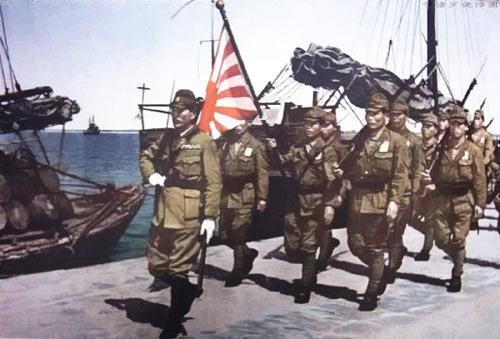
They were all brought from Japan after the war. U.S. forces in Japan imprisoned them in the Sugamo Prison for accused war criminals. They were then jailed at the Muntinlupa prison facility. They all claimed they followed Commonwealth President Manuel Quezon’s instructions before he left for his U.S. exile to stay and act as buffer.
Laurel was president of the Japanese-sponsored Second Republic from 1943 until Japan lost the war in 1945. He was charged with treason for having headed the Japan-sponsored republic. He also went into the 1943 visit of Japanese Emperor Hirohito with Vargas, Aquino Sr., and Osias, who were officials in the Second Republic.
The People’s Court has them arrested in Nara, Japan, held at Sugamo Prison for almost a year, and extradited on the basis of then President Manuel Roxas’s request to the U.S. Truman Harry. They were imprisoned in Muntinlupa, while undergoing trial.
But Roxas issued on Jan. 28, 2948 the Presidential Proclamation 51, which provided general amnesty to all persons accused of political and economic collaboration. It excluded those persons who committed murder, rape, and arson.
After his release, Laurel rebuilt his political career. He ran for president in the 1949 elections but lost to Elpidio Quirino in an election that was described with many irregularities and massive cheating. Laurel topped the senator elections in 1951 , became a key Nacionalista Party leader, and founder of the Laurel family political dynasty. He died in 1959, but he was never declared innocent, although the general amnesty ended his prosecution without declaring innocence.
Vargas was Quezon’s executive secretary to Quezon, who became mayor of Greater Manila “Open City,” which saved it from destruction. He was chair of the Executive Commission under the Japanese Occupation rulers. He later became the Philippine ambassador to Japan under the Laurel government. He retired from politics after his amnesty and focused on business and civic affairs. He built the Vargas Museum and participated in the Philippine Amateur Athletic Federation. He died in 1980.
Aquino was speaker of the National Assembly under Japanese rulers and a key Kalibapi leader. He died of a heart attack on Dec 20, 1947 in Manila, while watching a boxing match at the fabled Rizal Memorial Stadium. That was before his case was to be decided. Son Ninoy was with him that day. Family said he hardly visited Manila except for the court trial. After his death, Ninoy Aquino picked up the political pieces.
Camilo Osias was a known educator and author of Philippine Readers, a traditional reading material for grade schoolers in the prewar era. He was a member of the Laurel cabinet. He was a postwar senator until he retired in 1967. Other members of the Laurel Cabinet were Quintin Paredes, Vicente Madrigal, Rafael Alunan, and Teofilo Sison. They were charged with treason but were amnestied. They resumed their public life.
Emilio Aguinaldo, the first president, was 77 years old in 1942. He was accused of treason by accommodating the Japanese rulers. Aguinaldo gave radio broadcasts, urging Filipinos to cooperate with the Japanese rulers. He was also amnestied in 948.
Manuel Roxas was a paradox because he served as budget officer in the Laurel government. But several prominent people considered him a collaborator. He was Gen. Douglas MacArthur’s chosen postwar leader. He defeated Sergio Osmeña Sr. in the 1946 presidential elections to become the last President of the Commonwealth era and first of the Third Republic . Roxas issued the general amnesty that saved Laurel.
Claro M. Recto, a former senator and the foreign minister of the Laurel government, was a leading intellectual, who faced same charges. He declined amnesty and chose to stand trial to clear his name. The People’s Court tried him and acquitted him at the end. His defense was that his collaboration was civil and it was not treasonous, as it protected the people. Recto evolved to become the most vocal nationalist senator in the 1950s. He was a critic of the presence of U. S. military bases here, author of “Recto Nationalism,” a book, and a presidential candidate in 1957.
Most convicted collaborators were Makapili and Ganap members and military assets, not the elite politicians, who found ways to explain their collaboration with the Japanese Ocupation forces. The People’s Court applied treason strictly to those persons, who gave direct aid with overt acts like arrests, torture, and executions of Filipino civilians. It acted differently to the elite politicians, who found ways to rationalize their participation in the Japanese sponsored political initiatives to firm up their occupation of the country.
These were some of the People’s Court judgments and they were affirmed by the Supreme Court:
· Hilarion Vitriolo, Ganap member, aided Japanese in raiding, arresting, executing USAFFE soldiers/civilians; he was convicted of treason and meted out a life imprisonment and P10,000 fine.
· Jose Dimzon was convicted treason for aiding the Japanese soldiers in making arrests, torture, and executions.
· Anastacio Reyes was a Filipino Kempeitai member, who was arrested for identifying Filipino guerrillas; for being responsible for the murder of Teofilo Molano, he was given a life sentence.
· Santiago Familiar, Mori Cui, Eugenio Araw, Pedro Ricon were Makapili organizers, who were convicted of life and death.
· Carmelito Victoria was given a sentence of death and a fine of P20,000 for treason.
· Francisco Abad was guilty of the complex crime treason with homicide and he sentenced with death.
Most death sentences were not carried out. On July 4, 1953, then President Elpidio Quirino pardoned 323 Filipino collaborators and 105 Japanese POWs awaiting execution or serving sentences. 31 Japanese war criminals freed, 27 to serve remainder in Sugamo Prison, 57 life sentences. The burial ground of 17 executed Japanese war criminals became Filipino-Japanese Memorial Park.
The presidential pardon by Quirino effectively ended all collaboration cases. The People’s Court was dissolved and its records archived.
CONCLUSION: for the elite civilian collaborators, amnesty favored them. Their actions were largely framed as political, not criminal. They were allowed political rehabilitation. They returned to the Senate and Cabinet and were allowed to build and rebuild their political dynasties.
The likes of Laurel, Vargas, Osias, Paredes resumed elite status. They created a postwar elite consensus that collaboration should be buried for stability. Congress then endorsed amnesty by large majorities despite guerrilla anger.
Lower-class collaborators like Makapili, Ganap, local informers, and Kempeitai aides were excluded from amnesty because they were charged with murder. They served life sentences until Quirino pardon. This has reinforced the perception that forgiveness favored the powerful.
Hence, the moral legacy is that amnesty offered political closure, not moral resolution. Hence, collaboration remained an ethical question Recto’s refusal to accept it highlighted it. Historians now use Vargas-Laurel diaries (Sugamo diary) to argue defense. Collaboration was used as the survival strategy under then President Manuel Quezon’s instructions.
That structure explained why the Philippines, unlike France or Norway, had almost no elite collaborators imprisoned long-term. The Roxas amnesty of 1948 transformed the treason trial into a footnote, and allowed Laurel-Roxas-Aquino families to dominate postwar politics.
