




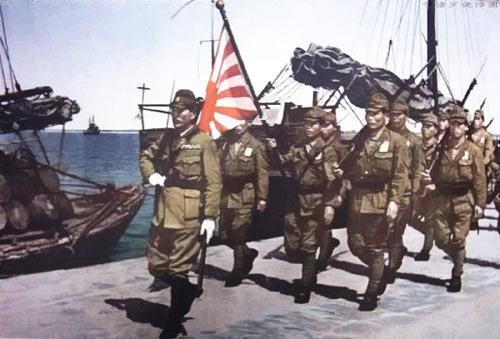

THERE were basic differences between the two major Filipino groups that supported the Japanese Occupation forces in the last world war. The Kapisanan sa Paglilingkod ng Bagong Filipino (Kalibapi) was essential a political party intended to generate a mass support for the Japanese forces, while the Malayang Katipunan ng mga Pilipino (Makapili) was an auxiliary group for spying ang anti-guerrilla works.
As a political party, Kalibapi was created essentially for propaganda, labor recruitment for Japanese projects, and legitimacy works for the Japanese-sponsored Philippine government under then President Jose Laurel Sr. Makapili developed into a militant auxiliary of the Japanese military, become sort of a militia force that was loyal to the Japanese Occupation forces. Kalibapi members were unarmed , while those Makapii members were armed with Japanese-supplied rifles, bayonets, and bamboo spears.
Kalibapi was formed by the end of1943, while Makapili came out in the last eight months of the last world war. Japanese military leaders were said to be disappointed with Kalibapi leaders because they were largely ineffective in institutionalizing Japanese rule in the country. Hence, they worked with other rabid Filipino collaborators to come out with a new organization that would have parallel functions with Kalibapi.
Makapili became the main vehicle for the Japanese military forces, as it fell into the hands of Japanese leaders in the country. Its leaders reported directly to Gen. Tomoyuki Yamashita, the military governor of the Philippines. They bypassed Laurel. They claimed to have recruited volunteers and members in the hundreds of thousands, but Dr. Ricardo Jose placed its membership at just 6,000. They were mostly poor and landless farmers, who were promised land reform by the Japanese.
Both Kalibapi and Makapili were hated because of the collaboration stigma. They were seen as “traitors.” As they were organized and functioning, most areas in the country fell into the control of guerilla units. Kalibapi officials were perceived as moochers, who collected rice for the Japanese military personnel. Makapili members were the militia people, who ratted on persons who directly or indirectly helped clandestine guerilla units.
In certain areas, the Japanese Kempeitai instituted zonification, or zones, that led to violence, including massacres of certain families. Many families remembered the Makapili traitors, who betrayed them to Japanese soldiers. In postwar trials, the People’s Court was formed and it tried them for treason. A historian noted: “So hated was the Kalibapi and an adjunct organization Makapili, which denounced guerrillas and their supporters, that possibly the only reason [Benigno Aquino Sr]. escaped death at the hands of partisans was his being in Japan.”
There was an element of survival pragmatism for the two organizations. In Manila and some provincial capitals where Japanese control was total, Kalibapi membership was perfect cover for rations, travel pass, and business permit. Some Kalibapi members used their positions to quietly help guerrillas by warning them of Japanese raids and issuing fake IDs. President Jose Laurel himself claimed he collaborated to shield Filipinos from harm.
For its part, Makapili attracted poor farmers in Central Luzon and parts of Manila with vague promises of land after the war. This was essentially rooted in what the Sakdalistas earlier fought. Some saw them as anti-elite, not pro-Japan.
Kalibapi pushed for an independence ceremony on Oct 14, 1943 and certain nationalists in its ranks genuinely believed Japan would free Asia from the colonialism of the whites, including the Americans, British, and Dutch. Kalibapi leader Benigno Ramos sincerely believed in anti-American independence. In certain areas with confrontations and confrontation between anti-Japanese Hukbalahap guerrillas and landlords, the landlords joined Kalibapi and Makapili for Japanese protection against Huk guerillas. They were appreciated by their tenants.
Dr. Ricardo Jose was correct to argue that not all Kalibapi leaders and members were traitors and all anti-Japanese guerrillas were heroes. During the Japanese Occupation, many Filipino crossed lines mainly for local survival.
The People’s Court was formed immediately after Japan surrendered on Aug. 15, 1945. It was the legal framework that decided who were the collaborators and who were not. It was created by Commonwealth Act No. 682, which was signed into law by then President Sergio Osmeña on September 25, 1945. This was in accordance with his Aug. 20, 1945 message that he intended to find out the collaborators, who worked with the Japanese.
The text of law: “There is hereby created a People’s Court composed of a Presiding Judge and fourteen Associate Judges… appointed by the President, with consent of Commission on Appointments, from among District Judges of First Instance…” It also formed the Office of Special Prosecutors to investigate and prosecute.
Its main jurisdiction centered on national security crimes committed during the last world war. It specifically mentioned the crimes of treason and espionage, which were punishable under Article 114 of the Penal Code.
It was a special court in the sense that the Court of Appeals was abolished by Executive Order 37 on March 10, 1945. Hence, decisions rendered by the People’s Court were appealable directly to the Supreme Court. Later, the Court of Appeals was recreated by RA 52 on Oct 4, 1946, and all related cases were transferred there.
The indictments filed before the People’s Court reached between 5,327 to 5,330 persons accused of treason. They were in the Special Prosecutors’ list. They included every identifiable person from the Jose Laurel Cabinet to Ganap Party members, Kalibapi officials and members and Makapili informers.
The People’s Court ordered the arrest and detention of about 1,000persons at the Old and New Bilibid Prison and other jails. But it tried far fewer – about 100 to 157 court cases actually went to trial with evidence. Many cases did not prosper because of the two-witness rule for treason, which was a U.S. constitutional requirement. At that time, the Philippines was still a colony of the U.S. and it had to follow the U.S. constitutional requirement.
This requirement needed at least two witnesses to the same overt act of giving aid and comfort to the enemy. This was hard to get, especially for economic collaboration. The People’s Court did not give any death penalty. This was because the Supreme Court later ruled that “mere holding of position in an enemy government does not per se constitute treason.”
By Jan. 1948 , the President Manuel Roxas issued a general amnesty. The Official Gazette Proclamation 51 says: “these trials have been held for more than two years now, but no final judgments convicting any one of the accused have been rendered” and “several verdicts of acquittal have been rendered and orders of dismissal issued.” (To Be concluded)
